The atelier
A house built around
one pair of hands at a time
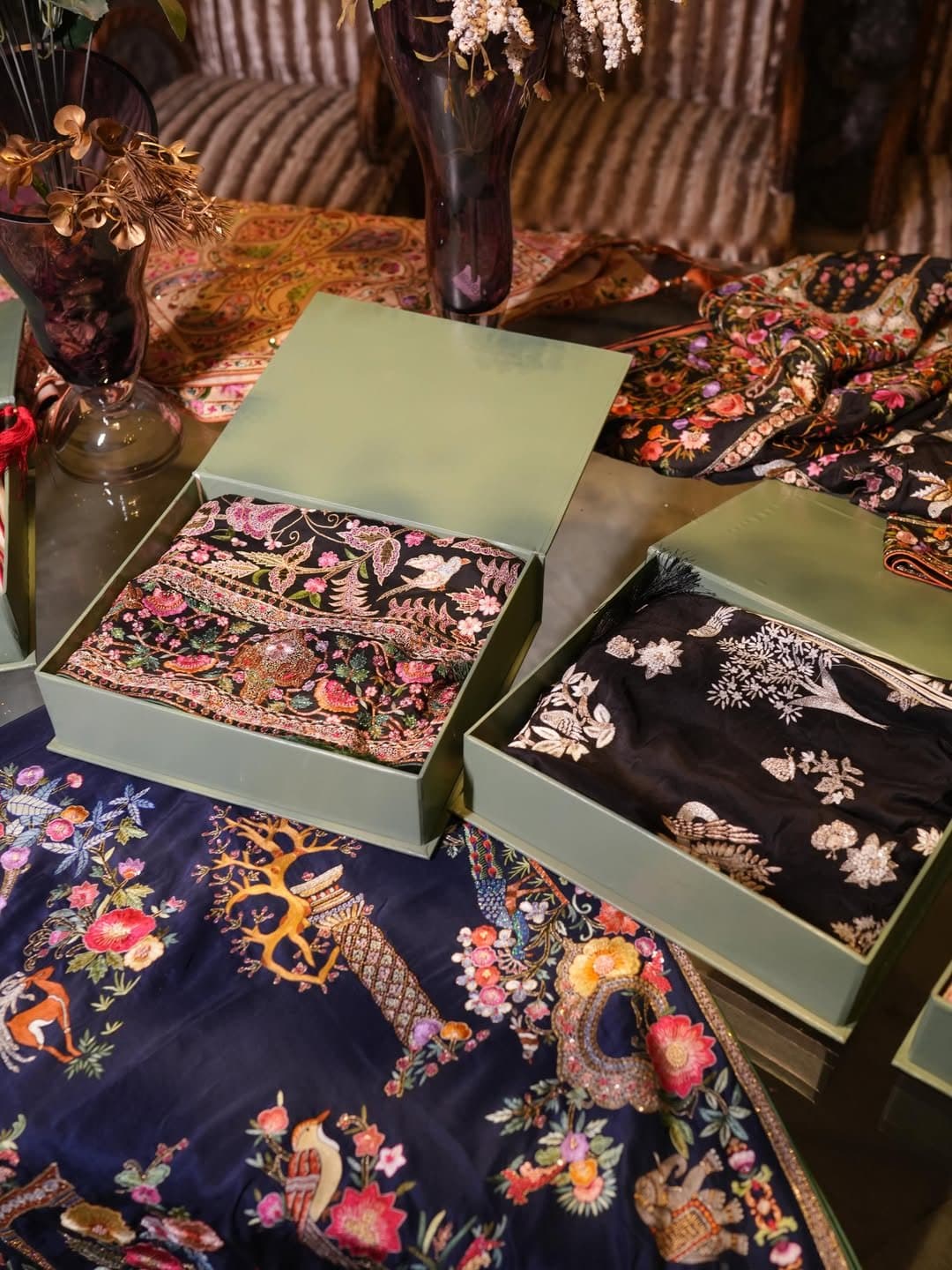
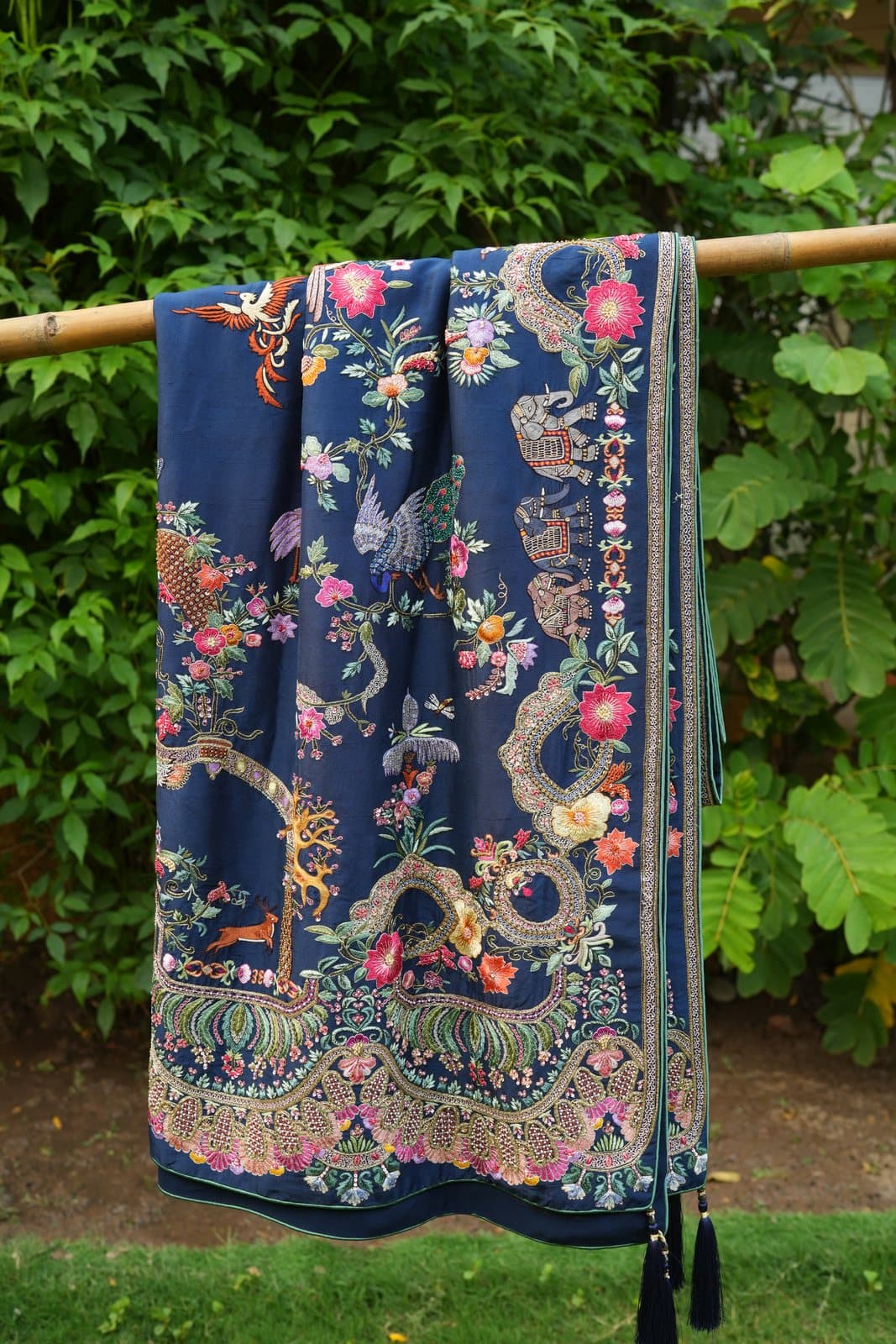
Mariam Hamza Studio began in Lahore with a small group of karigars and a refusal to work at scale. The techniques are old — Kashmiri sozni, Persian kalamkaar, Mughal-era tilla — and the studio’s only real contribution is patience: giving a piece the months it actually needs.
Every stitch tells a story
The hand
Four stages, one karigar
- The drawing
- A cartoon is drawn to the exact size of the finished shawl, then traced onto the ground cloth by hand. Nothing is set out on a repeat, which is why the two halves of a piece never mirror each other.
- The ground
- Silk, pashmina or a woven jamawar is chosen for how it will carry the weight of the thread. A heavy pictorial field needs a ground that will not pucker; a scattered sozni needs one that will still drape.
- The frame
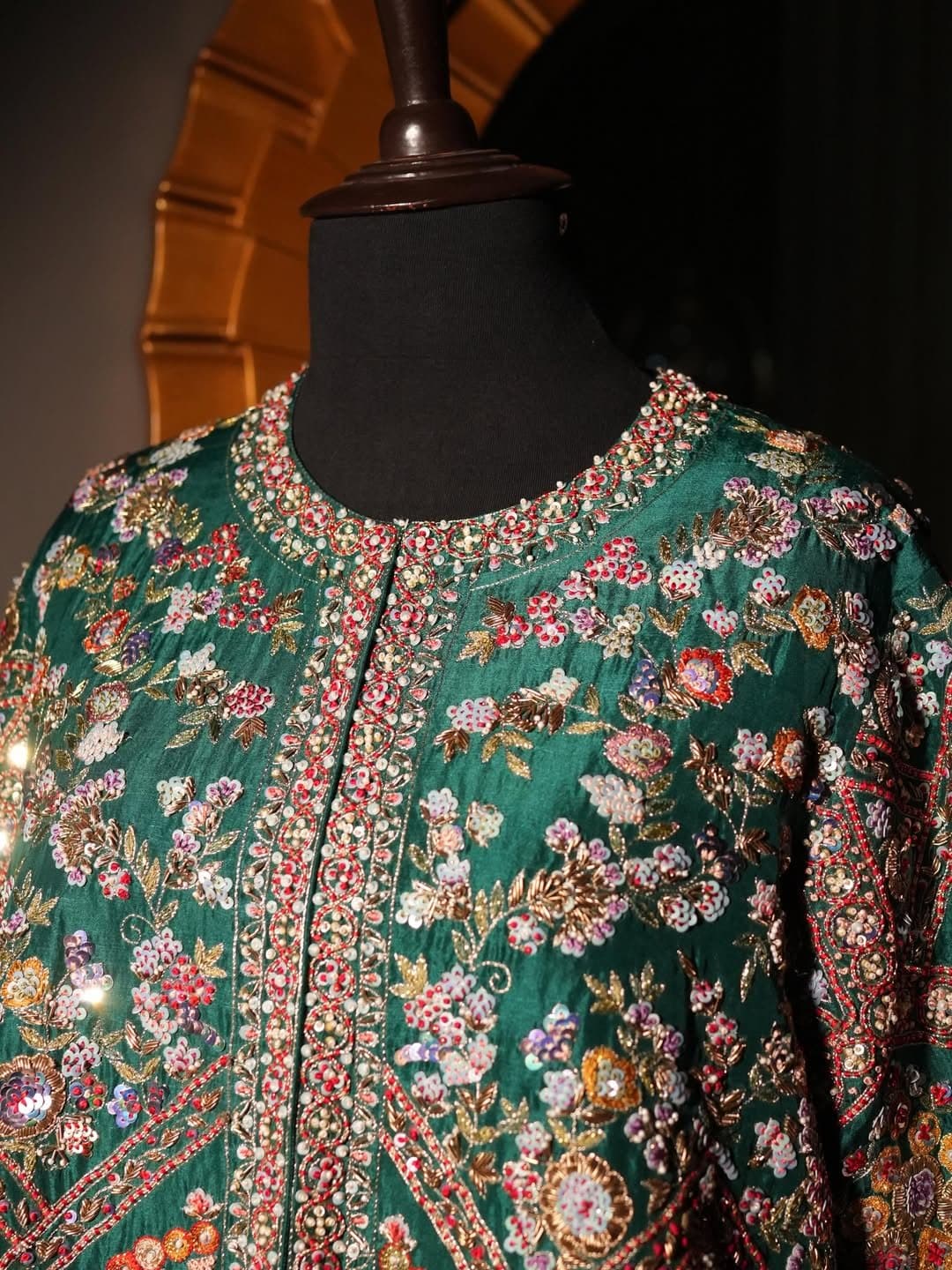
- One karigar takes the piece and keeps it. Eight months for a restrained border, fourteen for a full kalamkaar field. It does not pass between hands, and it is not hurried to a season.
- The finish
- The reverse is cleaned, edges are piped or tasselled by hand, and the piece is washed and pressed. Then it is numbered and entered in the archive before it is shown to anyone.
01
02
03
04
Where we have shown
Exhibitions
Dates for the coming season are shared with clients first
2025
Doha
October
2024
Dubai
Winter
2023
New York
Spring
2023
New Jersey
Autumn
2022
Lahore
Studio
Care of the cloth
How to keep it
for the next owner
- Store folded in muslin, never in plastic — embroidered silk needs to breathe.
- Refold along a different line each season so a crease never sets into the thread.
- Dry-clean only, and only with someone who has handled metal thread before.
- Keep out of direct sun; a strong light will lift the dye long before it touches the silk.
- A pulled thread is repairable. Send it back to the studio rather than trimming it.